
Home → Dog Breeds → Hound Group → Greyhound
Greyhound: Breed Profile, Temperament, Health, and Care Guide
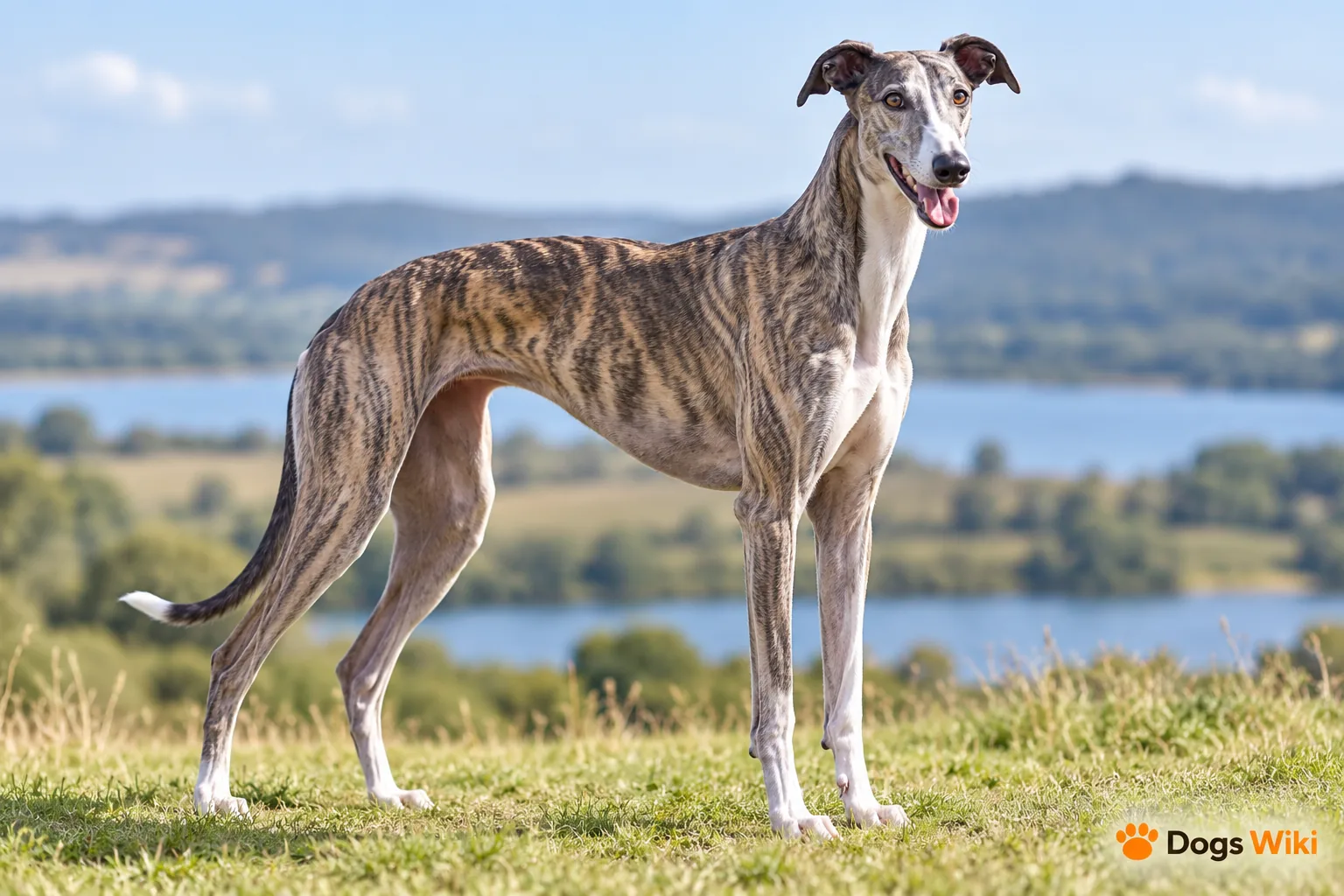
A Greyhound is a large Hound Group sighthound bred for pure speed, capable of reaching roughly 45 miles per hour and long recognized as the fastest dog breed alive.
Despite that racing pedigree, most Greyhounds are surprisingly low-energy companions at home, a contrast that surprises a lot of first-time owners. This guide covers where the breed originated, its temperament, how big Greyhounds get, how long they live, the health problems they are prone to, grooming, how much exercise they need, how easy they are to train, what to feed them, the pros and cons of owning one, and what else people ask.
What Is a Greyhound and Where Did the Breed Originate?
A Greyhound belongs to the American Kennel Club’s Hound Group, specifically the sighthound category of dogs bred to chase visible prey by sight rather than scent. The breed is one of the oldest in existence, with Greyhound-type dogs appearing in Egyptian tomb carvings dating back roughly 4,000 years, and it later spread through the Roman and Greek empires before reaching the rest of Europe. The AKC recognized the breed in 1885. Many Greyhounds available for adoption today are retired racing dogs, and the breed’s rehoming movement has been among the most successful rescue efforts in dog breed history.
The American Kennel Club defines the breed in its “Official Standard of the Greyhound” which sets out the size, coat, and temperament a Greyhound should have. As of September 2026, the AKC ranks the Greyhound 118th of 210 breeds in popularity.
What Is a Greyhound’s Temperament Like?
A Greyhound’s temperament is gentle and calm, often described as a “couch potato” despite the breed’s blistering top speed. Greyhounds are quiet dogs that rarely bark habitually, and while they can be reserved or aloof with strangers, they form deep bonds with their own family. The breed isn’t typically used as a guard or service dog, since its instinct runs toward flight and speed rather than confrontation.
How Big Do Greyhounds Get?
Greyhounds are a large, lean, deep-chested breed built almost entirely for speed, with a long, muscular back and powerful legs. Racing-line Greyhounds tend to run slightly smaller than show-line dogs, though both fall under the same breed standard.
What Is the Average Greyhound Height and Weight?
| Measure | American Kennel Club figure |
|---|---|
| Height | 28-30 inches (male), 27-28 inches (female) |
| Weight | 65-70 pounds (male), 60-65 pounds (female) |
| Life expectancy | 10-13 years |
Figures are from the American Kennel Club Greyhound breed profile, retrieved September 2026.
How Long Do Greyhounds Live?
Greyhounds live 10 to 13 years. Given the breed’s thin skin and low body fat, extra attentiveness to temperature management and cold sensitivity supports comfort and health, in particular in older dogs.
What Health Problems Are Greyhounds Prone To?
Greyhounds are documented as being at higher risk for the following conditions.
- Osteosarcoma (bone cancer). Greyhounds carry a higher rate of this cancer than many breeds, usually forming in a leg; amputation of the affected limb can allow the dog to survive.
- Bloat, or gastric dilatation-volvulus (GDV). A life-threatening emergency in deep-chested breeds requiring immediate veterinary care.
- Hypothyroidism. Greyhounds naturally run lower baseline thyroid levels than most breeds, which means owners and vets should confirm a full thyroid panel before starting treatment, since standard reference ranges can be misleading for this breed specifically.
- Cardiac issues and eye conditions. Recognized, breed-associated risks that a veterinarian can screen for.
- Sensitivity to cold and anesthesia. Not a disease, but a genuine physiological trait tied to the breed’s thin skin and low body fat, which affects how the dog handles cold weather and certain medications.
How Do You Groom a Greyhound?
Greyhounds have a short, low-maintenance coat that needs only minimal grooming beyond occasional brushing to remove loose hair. Given the breed’s low body fat and thin skin, a coat for cold or wet weather is a genuinely practical accessory rather than a fashion choice, and routine nail trims and dental care round out the grooming routine.
How Much Exercise Does a Greyhound Need?
A Greyhound needs moderate daily exercise, and the breed’s ideal routine is short bursts of intense sprinting followed by long stretches of rest, mirroring how it would have run in a race. A securely fenced area for off-leash sprinting is valuable, since the breed’s strong prey drive and top speed make an open, unfenced space risky. Despite the racing reputation, most Greyhounds are content with a couple of good walks and one energetic sprint session rather than hours of continuous activity.
Are Greyhounds Easy to Train?
Greyhounds are moderately trainable and generally calm, cooperative dogs once they understand what’s being asked. Positive, reward-based training suits the breed’s sensitive, gentle temperament far better than firm correction, and many retired racing Greyhounds need basic house-training since they haven’t lived as house pets before.
What Should You Feed a Greyhound?
Greyhounds need a calorie- and protein-rich diet suited to their lean, athletic build, split into two meals a day to help prevent bloat. Weight gain of a few pounds is common after retirement from racing as activity level drops, so monitoring body condition and adjusting portions with a veterinarian’s guidance helps keep the breed at a healthy weight.
What Are the Pros and Cons of Owning a Greyhound?
Here are the main advantages of owning a Greyhound.
- Calm, gentle temperament that’s surprisingly low-energy at home
- Quiet, rarely barks
- Low-maintenance coat
- Many adoptable retired racing dogs available through breed-specific rescue
Here are the main drawbacks of owning a Greyhound.
- Documented higher risk of bone cancer
- Sensitive to cold weather and certain medications given low body fat
- Strong prey drive means small pets and unfenced areas need caution
- Naturally lower thyroid baseline can complicate hypothyroidism diagnosis
Adopting a retired racing Greyhound through a breed-specific rescue is among the most well-established rescue paths of any breed, worth a look for anyone drawn to the breed’s calm temperament.
What Else Do People Ask About the Greyhound?
The questions below cover how much a Greyhound costs, whether Greyhounds are good apartment dogs, the difference between the Greyhound and the Whippet, why Greyhounds get bone cancer so often, and whether Greyhounds need a lot of exercise.
How much does a Greyhound cost?
A Greyhound puppy from a reputable breeder who screens for cardiac and orthopedic health costs from around $800 to $1,500, though prices vary by region and bloodline. Adopting a retired racing Greyhound through a rescue organization is usually a lower-cost and common alternative.
Are Greyhounds good apartment dogs?
Yes, Greyhounds can be excellent apartment dogs, since the breed’s actual day-to-day energy level is much lower than its racing reputation suggests. A secure area for occasional sprinting, plus regular walks, generally meets the breed’s exercise needs even in a smaller living space.
What Is the Difference Between the Greyhound and the Whippet?
Greyhounds and Whippets are both AKC sighthounds with a similar sleek build and calm, gentle temperament, but they differ considerably in size. Greyhounds are considerably larger and faster, while Whippets are a smaller-scale version developed later in England, sometimes called the “poor man’s racehorse.”
Why do Greyhounds get bone cancer so often?
Greyhounds carry a documented, breed-wide predisposition to osteosarcoma, a bone cancer that typically develops in one of the legs, at a higher rate than most other breeds. Researchers haven’t identified one single cause, and while the cancer is usually fatal if untreated, amputation of the affected limb can allow many dogs to survive and maintain a good quality of life.
Do Greyhounds need a lot of exercise?
No, despite being the fastest dog breed, Greyhounds don’t need hours of continuous exercise. The breed does well on short bursts of sprinting in a secure area combined with long periods of rest, which is why many Greyhounds adapt well to apartment living once their basic exercise needs are met.
Related Guides
More guides on The Dogs Wiki cover training, nutrition, and adoption.
| Guide |
|---|
| Training |
| Nutrition |
| Adoption |
Leave a Reply