
Home → Dog Breeds → Hound Group → Norwegian Elkhound
Norwegian Elkhound: Breed Profile, Temperament, Health, and Care Guide
A Norwegian Elkhound is a medium-sized Hound Group breed.
It’s one of Europe’s oldest dogs, dating back to the Viking era. Norse art and legend feature the breed. Norway’s Defense Ministry can still legally mobilize privately owned Elkhounds during a national emergency. This guide covers where the breed originated, its temperament, how big Norwegian Elkhounds get, how long they live, the health problems they are prone to, grooming, how much exercise they need, how easy they are to train, what to feed them, the pros and cons of owning one, and what else people ask.
What Is a Norwegian Elkhound and Where Did the Breed Originate?
A Norwegian Elkhound belongs to the AKC’s Hound Group. It’s a Spitz-type breed, built to withstand cold and hunt for days at a time. The breed sailed with Vikings and appears throughout Norse art. Its original job was holding large elk at bay until a hunter arrived, working independently at real distance from its handler.
The American Kennel Club defines the breed in its “Official Standard of the Norwegian Elkhound”, approved December 13, 1988, which sets out the size, coat, and temperament a Norwegian Elkhound should have. As of September 2026, the AKC ranks the Norwegian Elkhound 124th of 210 breeds in popularity.
What Is a Norwegian Elkhound’s Temperament Like?
A Norwegian Elkhound’s temperament is fearless, loyal, and genuinely energetic. The breed is amazingly devoted, sometimes protective to the point of possessiveness over its family. Elkhounds can be reserved with strangers but greet familiar people with real enthusiasm. This breed’s independent streak, useful in the field, makes obedience training a genuine challenge.
How Big Do Norwegian Elkhounds Get?
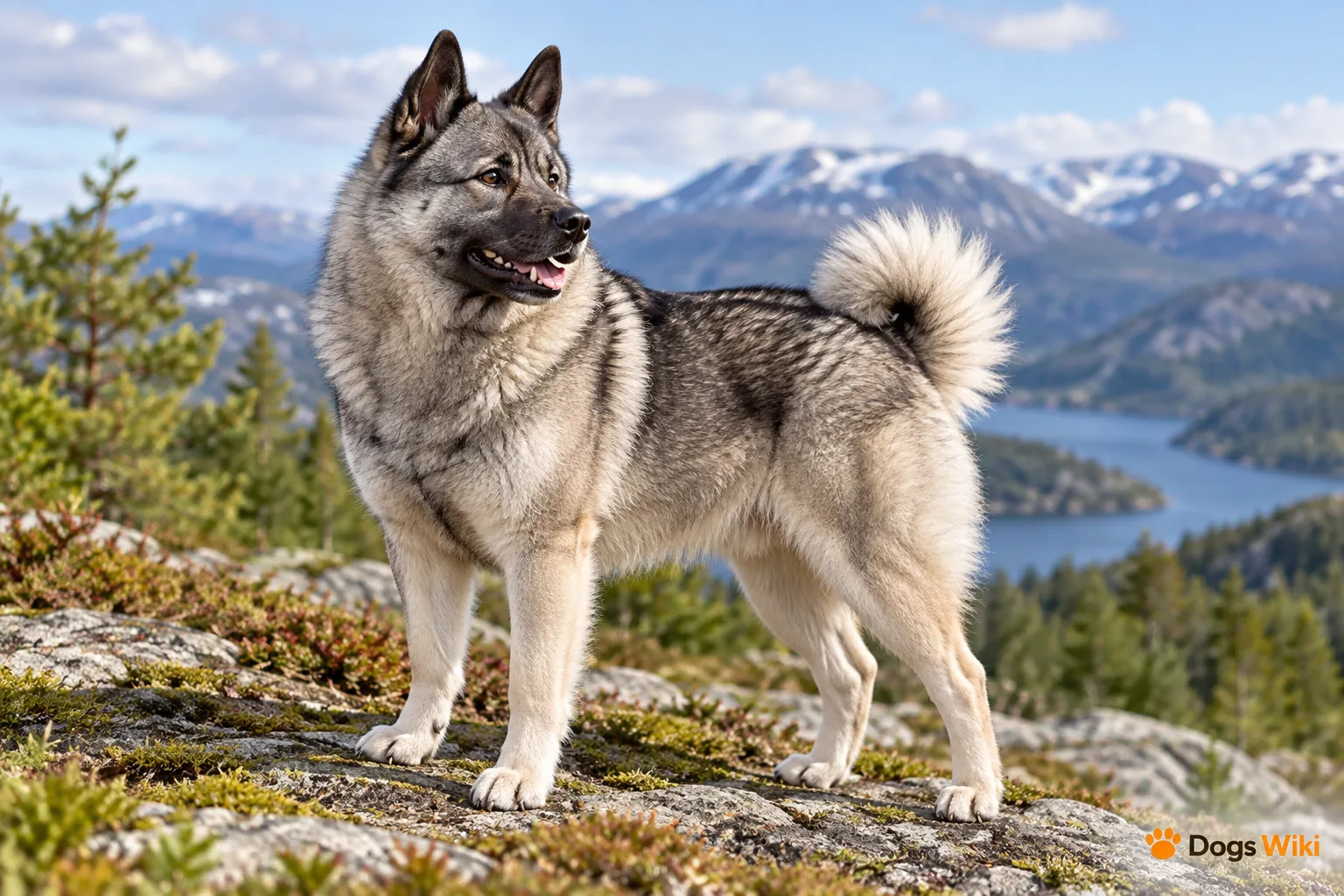
Norwegian Elkhounds are a medium-sized, squarely built breed with a thick, silver-gray double coat. The tail curls over the back, a classic Spitz trait. Ears stand erect and alert.
What Is the Average Norwegian Elkhound Height and Weight?
| Measure | American Kennel Club figure |
|---|---|
| Height | 20.5 inches (male), 19.5 inches (female) |
| Weight | 55 pounds (male), 48 pounds (female) |
| Life expectancy | 12-15 years |
Figures are from the American Kennel Club Norwegian Elkhound breed profile, retrieved September 2026.
How Long Do Norwegian Elkhounds Live?
Norwegian Elkhounds live 12 to 15 years, a long lifespan for a medium breed. Regular veterinary care supports a full life, in particular given the breed’s documented joint and eye risks.
What Health Problems Are Norwegian Elkhounds Prone To?
Norwegian Elkhounds are documented as being at higher risk for the following conditions.
- Hip dysplasia. A joint condition where the hip doesn’t fit together properly, screened for with x-rays.
- Elbow dysplasia. A joint condition affecting the front limbs.
- Eye problems. Recognized, breed-associated concerns worth screening for with regular exams.
- Progressive retinal atrophy. An inherited eye disease that can affect vision over time.
How Do You Groom a Norwegian Elkhound?
Norwegian Elkhounds have a thick double coat with heavy seasonal shedding. Brushing several times a week is genuinely necessary, more during the two annual blowouts. The coat sheds a lot for a medium-sized dog.
How Much Exercise Does a Norwegian Elkhound Need?
A Norwegian Elkhound needs substantial daily exercise. The breed was built for days of cold-weather hunting. Firm, consistent structure matters as much as exercise, since this breed will genuinely walk all over an inconsistent owner.
Are Norwegian Elkhounds Easy to Train?
Norwegian Elkhounds are intelligent but genuinely hard to train given their independence. Firm, consistent, positive training is essential, since harsh methods backfire with this breed. The Elkhound sees itself as a partner, not a subordinate.
What Should You Feed a Norwegian Elkhound?
A Norwegian Elkhound does well on a formula suited to its age and genuinely high activity level. A veterinarian can help set appropriate portions.
What Are the Pros and Cons of Owning a Norwegian Elkhound?
Here are the main advantages of owning a Norwegian Elkhound.
- Loyal, fearless, genuinely devoted temperament
- Long average lifespan for a medium breed
- Effective, alert watchdog
- Hardy in cold climates
Here are the main drawbacks of owning a Norwegian Elkhound.
- Heavy seasonal shedding twice a year
- Genuinely difficult to train given real independence
- Prone to barking and territorial behavior
- Best suited to experienced owners with older children
Norwegian Elkhound rescue organizations place adult dogs regularly, worth a look for anyone drawn to this breed’s loyal temperament but not set on a breeder search.
What Else Do People Ask About the Norwegian Elkhound?
The questions below cover how much a Norwegian Elkhound costs, whether Norwegian Elkhounds are good family dogs, why Norway’s Defense Minister is connected to this breed, and whether Norwegian Elkhounds shed a lot.
How much does a Norwegian Elkhound cost?
Prices vary by region, bloodline, and breeder reputation. A puppy from a health-tested breeder typically costs more than average. Adopting an adult dog is usually cheaper.
Are Norwegian Elkhounds good family dogs?
The breed does best with well-behaved older children or none at all, given its territorial, sometimes possessive nature. It’s genuinely devoted to its family once trust is established.
Why is Norway’s Defense Minister connected to this breed?
A historical Norwegian law lets the country’s Defense Minister to mobilize privately owned Norwegian Elkhounds during a national emergency. This reflects the breed’s long-standing importance in Norwegian culture and military history.
Do Norwegian Elkhounds shed a lot?
Yes, genuinely a lot for a medium-sized breed. The thick double coat blows out twice a year, requiring daily brushing during those periods to manage the volume of loose hair.
Related Guides
More guides on The Dogs Wiki cover behavior, health, grooming, training, nutrition, and adoption.
| Guide |
|---|
| Behavior |
| Health |
| Grooming |
| Training |
| Nutrition |
| Adoption |
Leave a Reply