
Home → Dog Breeds → Herding Group → Shetland Sheepdog
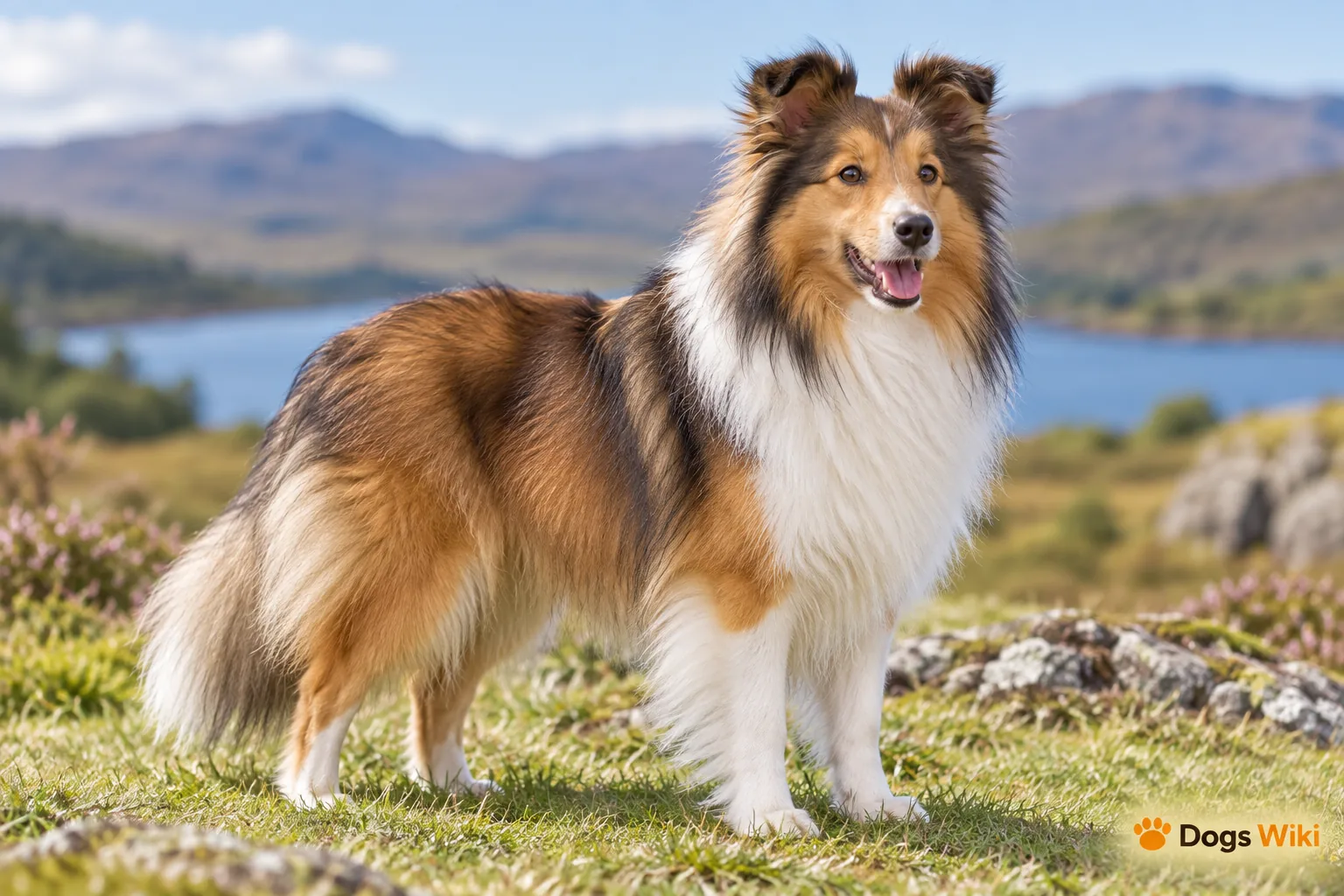
A Shetland Sheepdog, or Sheltie, is a small to medium Herding Group breed from Scotland’s Shetland Islands, bred to herd sheep, poultry, and ponies, and a separate breed from the Rough Collie.
A Shetland Sheepdog, commonly called a Sheltie, is a small to medium Herding Group breed that developed on Scotland’s remote, windswept Shetland Islands, where sparse vegetation favored small livestock and, in turn, a compact herding dog able to manage sheep, poultry, and ponies alike. Often mistaken for a miniature Rough Collie, the Sheltie is a separate breed with its own history, though the family resemblance is genuine. This guide covers where the breed originated, its temperament, how big Shetland Sheepdogs get, how long they live, the health problems they are prone to, grooming, how much exercise they need, how easy they are to train, what to feed them, the pros and cons of owning one, and what else people ask.
What Is a Shetland Sheepdog and Where Did the Breed Originate?
A Shetland Sheepdog belongs to the American Kennel Club’s Herding Group. The breed developed in Scotland’s Shetland Islands, likely bred with some Icelandic dog influence and possibly a black and tan King Charles-type terrier, to herd sheep, poultry, and even ponies in the islands’ harsh, resource-scarce conditions. British naval ships stopping at the islands for maneuvers brought the breed to England, where it was first shown around 1906 under the name Shetland Collie, a label Collie enthusiasts rejected. The breed was renamed Shetland Sheepdog, and the AKC recognized it in 1911.
The American Kennel Club defines the breed in its “Official Standard of the Shetland Sheepdog”, approved May 12, 1959, which sets out the size, coat, and temperament a Shetland Sheepdog should have. As of September 2026, the AKC ranks the Shetland Sheepdog 29th of 210 breeds in popularity.
Which Shetland Sheepdog Colors Does the Standard Allow?
Three base colors are accepted: black, blue merle, and sable, which ranges from golden to mahogany. Each is marked with varying amounts of white and tan. Brindle is a disqualification, and so is any height outside 13 to 16 inches at the shoulder. Blue eyes are allowed only in blue merles. As in other merle breeds, pairing two merles can produce mostly white “double merle” puppies with a high risk of deafness and blindness.
What Is a Shetland Sheepdog’s Temperament Like?
A Shetland Sheepdog’s temperament is gentle, sweet, and eager to please, and the breed is genuinely sensitive, forming intensely loyal, affectionate bonds with its family. The standard describes the Sheltie as “intensely loyal, affectionate, and responsive to his owner,” though it “may be reserved toward strangers.” Shelties are playful and do well in obedience and agility, but the breed can be wary of strangers, greeting guests with alert barking whether to warn the family or simply out of excitement. Because Shelties are sensitive to how they’re treated, harsh handling can lead to anxiety or a withdrawn temperament, making a gentle, patient approach important.
Are Shetland Sheepdogs Sensitive to Noise?
Many are. Thunderstorms, fireworks, and sudden household noises upset a good share of Shelties, and a frightened Sheltie may pace, hide, or bark. Gentle exposure to everyday sounds in puppyhood, a quiet den-like crate, and calm reassurance during storms help. Severe noise fear is worth raising with a vet, since both training plans and medication can ease it.
How Big Do Shetland Sheepdogs Get?
Shetland Sheepdogs are a small to medium, strong, compact yet agile breed with a wedge-shaped head, small erect ears, and a thick double coat featuring a mane, frill, and feathered legs and tail reminiscent of the larger Rough Collie.
What Is the Average Shetland Sheepdog Height and Weight?
| Measure | American Kennel Club figure |
|---|---|
| Height | 13-16 inches |
| Weight | 15-25 pounds |
| Life expectancy | 12-14 years |
Figures are from the American Kennel Club Shetland Sheepdog breed profile, retrieved September 2026.
How Long Do Shetland Sheepdogs Live?
Shetland Sheepdogs live 12 to 14 years. Regular veterinary care, including eye and hip screening, supports a full lifespan for this healthy small to medium breed.
What Health Problems Are Shetland Sheepdogs Prone To?
Shetland Sheepdogs are documented as being at higher risk for the following conditions.
What Is Dermatomyositis in Shetland Sheepdogs?
Dermatomyositis is an inherited inflammatory disease of the skin and, in some dogs, the muscles. It appears in young dogs as crusting, scarring, and hair loss on the face, ear tips, legs, and tail tip, and severe cases cause muscle wasting and trouble swallowing. Sun exposure and other stresses can make flare-ups worse. A genetic risk test helps breeders avoid pairings likely to produce affected puppies.
What Eye Problems Affect Shetland Sheepdogs?
Collie eye anomaly is an inherited defect in the back of the eye that ranges from harmless to blinding, and progressive retinal atrophy causes gradual vision loss. Both are common in Collie-family breeds and have DNA tests. Puppies should have an eye exam by a veterinary ophthalmologist at six to eight weeks of age, when collie eye anomaly is easiest to detect.
What Is the MDR1 Mutation in Shetland Sheepdogs?
The MDR1 mutation is an inherited drug sensitivity that also affects Collies and Australian Shepherds. Carriers and affected dogs can react badly to certain medications, including high doses of ivermectin, loperamide, and some sedatives. A cheek-swab test identifies at-risk dogs, and the result belongs in the dog’s veterinary file.
What Other Health Problems Affect Shetland Sheepdogs?
Hypothyroidism, a shortage of thyroid hormone, is common in the breed and causes weight gain, low energy, and coat changes. Gallbladder mucocele is also more frequent in Shelties than in most breeds. This buildup of thick, jelly-like bile in the gallbladder is linked to high blood fats, and it can rupture if it is not caught, so vomiting, a painful belly, or yellowing gums in a Sheltie need prompt attention. Hip dysplasia, von Willebrand disease, and hemophilia, both inherited bleeding disorders, also occur, along with Legg-Calve-Perthes disease and patellar luxation.
Which Health Tests Should a Shetland Sheepdog Breeder Provide?
Ask for OFA hip results, a thyroid panel, an eye exam by a veterinary ophthalmologist, and DNA results for collie eye anomaly, progressive retinal atrophy, MDR1, and von Willebrand disease for both parents. A breeder should also be able to discuss dermatomyositis in the pedigree and whether a risk test was run.
How Do You Groom a Shetland Sheepdog?
Shetland Sheepdogs have a thick double coat with a long, straight outer layer and a dense, woolly undercoat, providing real protection against harsh weather but requiring genuine grooming commitment. Regular brushing multiple times a week prevents matting, in particular around the mane, frill, and leg feathering, with more frequent brushing needed during seasonal shedding.
| Grooming task | How often |
|---|---|
| Line-brush with a pin brush and undercoat rake | Two to three times a week, daily during a shed |
| Comb behind the ears and through the pants | Every brushing |
| Trim feet and hocks | Every 4 to 6 weeks |
| Trim nails | Every 3 to 4 weeks |
| Bath | Every 1 to 2 months |
Lightly misting the coat with water before brushing reduces breakage and static. Spring and fall bring a heavy shed, when handfuls of undercoat come out at every session; a warm bath followed by a thorough blow-dry loosens it faster. Shaving is not recommended, because the undercoat can grow back unevenly.
How Much Exercise Does a Shetland Sheepdog Need?
A Shetland Sheepdog needs regular daily exercise combined with genuine mental stimulation, since the breed’s intelligence means it needs more than physical activity alone to stay content. Varied activities like lure coursing, herding trials, tracking, or flyball challenge the breed both physically and mentally, and a bored Sheltie left to find its own entertainment may resort to chewing or digging.
Which Activities Suit a Shetland Sheepdog?
Around an hour a day of walks, play, and training keeps most adults content. Shelties do not need marathon runs, but they do need variety and a job to think about, and a dog that only ever walks the same block will invent its own games. Agility is a natural fit, and Shelties are among the most successful breeds in the sport thanks to their speed and focus. Herding lessons, rally, obedience, and trick training also suit them. Puppies should skip repeated jumping until their growth plates close at around a year.
Are Shetland Sheepdogs Easy to Train?
Yes, Shetland Sheepdogs are highly trainable and genuinely eager to please, and the breed’s intelligence lets it learn new commands fast. Consistent, positive reinforcement training suits the breed’s sensitive temperament well, since Shelties don’t respond well to harsh corrections and do their best work when training feels like a genuinely positive experience.
What Should You Feed a Shetland Sheepdog?
Shetland Sheepdogs do well on a formula suited to their age and activity level, and given the breed’s small to medium size, portion control matters for maintaining a healthy weight throughout life. A veterinarian can help set an appropriate feeding plan for an individual dog.
How Do You Keep a Shetland Sheepdog at a Healthy Weight?
Shelties gain weight easily, and the thick coat hides it. Run your hands along the sides every week; the ribs should be easy to feel. Two measured meals a day suit adults, while puppies eat three until about six months. Keep fatty scraps off the menu, since high blood fats are linked to gallbladder disease in the breed, and count training treats toward the daily total.
What Are the Pros and Cons of Owning a Shetland Sheepdog?
Here are the main advantages and drawbacks of owning a Shetland Sheepdog, side by side.
| Pros | Cons |
|---|---|
| Gentle, sweet, genuinely affectionate temperament | Sensitive temperament that doesn’t tolerate harsh handling |
| Highly trainable and does well at obedience and agility | Prone to alert barking, in particular with unfamiliar visitors |
| Compact size well suited to a range of living situations | High grooming commitment for the thick double coat |
| Loyal and deeply devoted to family | Documented risk of dermatomyositis, a breed-specific condition |
People who love the breed’s gentle temperament but would rather not search for a breeder can contact Shetland Sheepdog rescue organizations, which place adult dogs regularly.
What Else Do People Ask About the Shetland Sheepdog?
The questions below cover what it costs to buy a Shetland Sheepdog, whether a family home is a good fit, the difference between the Shetland Sheepdog and the Rough Collie, and why barking is so common in the breed.
What does it cost to buy a Shetland Sheepdog?
Shetland Sheepdog prices vary by region, bloodline, and breeder reputation, and a puppy from a breeder who screens for eye, hip, and genetic health costs more than one that doesn’t. Adopting an adult Sheltie through a rescue is a lower-cost alternative.
Is a family home a good fit for a Shetland Sheepdog?
Yes, Shetland Sheepdogs are widely considered excellent family dogs, thanks to a gentle, loyal, affectionate temperament that suits a range of household types. Their sensitivity means they do best in calm, patient households that use positive rather than harsh training methods.
What Is the Difference Between the Shetland Sheepdog and the Rough Collie?
Shetland Sheepdogs and Rough Collies share a similar look and are frequently mistaken for one another, but they’re separate breeds, with the Sheltie considerably smaller. Despite popular belief, the Sheltie isn’t simply a miniaturized Collie; it developed on Scotland’s Shetland Islands with its own history, though Collies were used in the breed’s early development.
Why is barking so common in the Shetland Sheepdog?
Shetland Sheepdogs are naturally alert watchdogs, quick to bark at strangers, unfamiliar sounds, or simply out of excitement, a trait rooted in the breed’s herding and guarding history on the Shetland Islands. Consistent training can meaningfully reduce excessive barking, though the breed’s alert nature won’t disappear entirely.
Related Guides
More guides on The Dogs Wiki cover behavior, health, training, nutrition, and adoption.
| Guide |
|---|
| Behavior |
| Health |
| Training |
| Nutrition |
| Adoption |
Comments
One response to “Shetland Sheepdog: Breed Profile, Temperament, Health, and Care Guide”
[…] Shetland Sheepdog […]